

Solar On Grid System
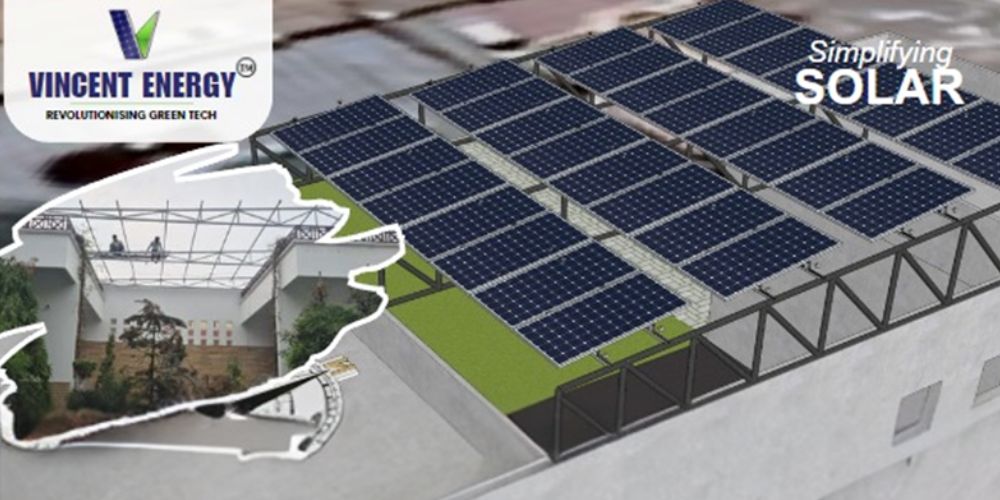
A Solar Rooftop On-Grid System is a solar power generation system that is installed on the rooftop of a building and connected directly to the local electricity grid. This type of system is designed to harness solar energy during daylight hours to generate electricity, which can either be used immediately to power the building or exported to the grid.
Here’s an overview of how it works and its benefits:
How It Works
1. Solar Panels:
Photovoltaic (PV) panels are installed on the rooftop to capture sunlight and convert
it into direct current (DC) electricity. We at Vincent Energy uses Cutting Edge High
Quality Solar Modules of Reputed Brands such as – Adani, Vikram, Waaree etc to
Name a Few. Topcon made modules is the Latest Tech. which we adopt while
installing solar plants.
2. Inverter:
The DC electricity generated by the solar panels is converted into alternating current
(AC) electricity, which is compatible with the grid and can be used to power
household or commercial appliances. We at Vincent Energy uses Top notch quality
inverters of reputed brands such as- Polycab, Havells, Waaree, Growatt, K-Solar etc.
3. Net Metering:
A bidirectional meter, often referred to as a net meter, tracks the electricity
produced by the solar system and the electricity consumed from the grid.
If the solar system produces more electricity than is consumed, the excess is sent
back to the grid, and the consumer receives a credit on their electricity bill.
4. Grid Connection:
The system is connected to the local electricity grid, allowing seamless energy
exchange. When the solar panels don’t produce enough electricity (e.g., at night),
the grid supplies the additional power needed.
5. Monitoring System:
A monitoring system tracks the performance of the solar panels and the overall
system, providing data on energy production, consumption, and efficiency.
Benefits of a Solar Rooftop On-Grid System
- Significant reduction in electricity bills
- Earn credits through net metering
- Minimal maintenance required
- Reduces carbon footprint
- Easy scalability
- Government incentives & rebates
- High efficiency & reliability
- Long-term cost savings
- Promotes clean energy
- Zero battery maintenance
Ideal Applications
• Residential Buildings: Homes with adequate roof space can install solar panels to reduce electricity bills and contribute to sustainability.
• Commercial Buildings: Businesses can lower operational costs by generating their own electricity.
• Industrial Facilities: Large rooftops in industrial settings can host extensive solar installations to power operations and reduce reliance on the grid.
Considerations
• Initial Investment: While the upfront cost can be significant, the long-term savings and return on investment are substantial.
• Sunlight Availability: The efficiency of the system depends on the amount of sunlight the rooftop receives, which varies based on location and season.
• Grid Dependence: Since the system is grid-tied, it won’t function during a power outage unless paired with a battery storage solution.
A Solar Rooftop On-Grid System is a practical and sustainable solution for reducing electricity costs and promoting renewable energy use.
Models Available
| S. No. | Model | Range |
|---|---|---|
| 1 | VE1KW | 1KW–5KW (Single phase) |
| 2 | VE3KW | 3KW–5KW (Three phase) |
| 3 | VE5KW | 5KW (Three phase) |
| 4 | VE8KW | 8KW (Three phase) |
| 5 | VE10KW | 10KW (Three phase) |
| 6 | VE12KW | 12KW (Three phase) |
| 7 | VE15KW | 15KW (Three phase) |
| 8 | VE20KW | 20KW (Three phase) |
| 9 | VE25KW | 25KW (Three phase) |
| 10 | VE30KW | 30KW (Three phase) |
| 11 | VE40KW | 40KW (Three phase) |
| 12 | VE50KW | 50KW (Three phase) |
| 13 | VE100KW | 100KW (Three phase) |